What Does It Take To Make Life Worth Living?

Today more than ever in all of the turmoil and change the old adage that “life is determined by the questions we ask” certainly needs front and center stage. If we are open minded and using our creative thinking focus we might ask ourselves the question in the headline.,

I went to a dinner tonight where the generations were discussing what they were facing. We had retired, recent college graduates, and those still very active in the work a day world. While it was acknowledged that each generation must find its way the difference between today and earlier times was that employment today is more challenging. It is not that clear where opportunity is and how to land on one’s feet. It used to be that people had a game plan. They would find a career, apply themselves, save and muddle through to more gracious years. But now more than ever, nothing looks very certain, and when it is all stripped down here is what one of the leading thinkers and psychologists of the day, Mihaly Csikszentmihaly has to say about What Makes Life Worth Living

Where in the World Are We Going?

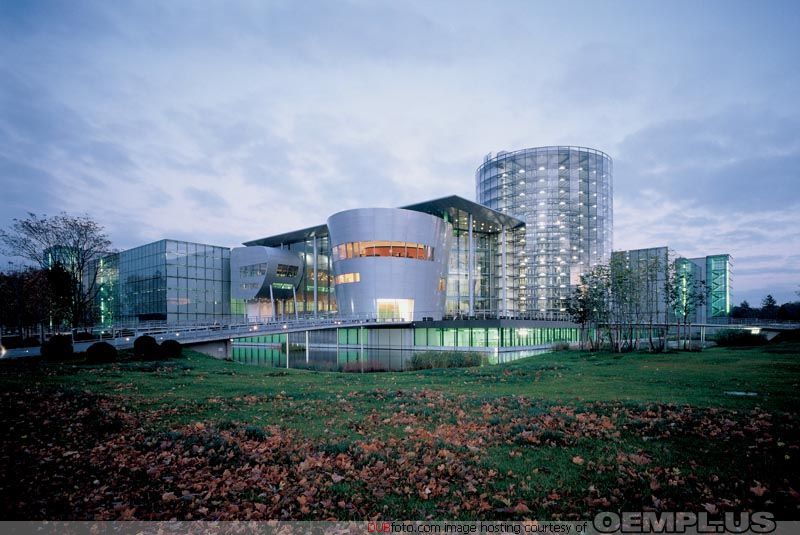
Dresden VW Phaeton Plant

We are living in such sensational times whether political, economic, social or environmental that it is difficult to grasp the consequences. One thing for sure that will be happening is that our creative thinking will look for ways to make it more palatable and force us to become more open minded about where it is all going.

According to the Futurist Magazine, “The average American consumes about 34 gigabytes of data and information every day… and that amount of data will rise 44-fold in the next decade. The Economist Magazine predicts, “that by 2017 there could be as many as 7 trillion wirelessly connected devices and objects, which translates to approximately 1,000 per person. Personally I can’t grasp that yet.

I maintain that one must let “technology be your friend.” It doesn’t mean that I have to gobble down every new device, but that I actually find applications which make daily life easier. The more I do this the more I get into the flow of life at this ever increasing pace.

While there is a backlash at some level of how technology is taking over our lives there is also the positive side.

Here is an example of what a future factory looks like now. It is not only aesthetically beautiful but creates an interface between customer and producer. It is the Dresden Volkswagon plant where they make the Phaeton. The real creative thinking was to get the city fathers to allow the plant to be built in the heart of the city. See how they did it.

https://www.youtube.com/embed/nd5WGLWNllA?rel=0

How To Gamble Sensibly

I think we have all been in situations where some favorable turn of events suggested to us that lady luck was in our corner. Then we were liable to “bet the farm” against all rational measures. But how can we be open minded and think creatively about why and what we are doing?

What is happening and how do we see a larger picture?

Most of us like to think of ourselves as being rationale when it comes to a reasonable bet on the future.

Years ago our advertising agency had an insurance company for a client and I was reviewing a report that said that 80% of all lump sum payments received by a person regardless of age or occupation would be gone in five years, that’s right five years! Why was this? Well, in the beginning ,one might feel that they could take this lump sum and grow it like it was on steroids so that they could really have something. This would mean that they were open to riskier investments with at least a portion of the money. As the riskier investment went south, there was the desire to make up for the loss by shoving a part of the remaining money into yet an even riskier situation. You can see the pattern.

It is said in the venture capital world, those people who back start up companies that for every ten companies they invest in only one makes it and of course pays for the other ten failures. Why is this? It is because the unknowns are so great. Simple as that. But this piece of information is missed by the average person. Recently a large number of friends were offered a chance to invest in a star-tup in which they felt like insiders. The software product, opportunity, and people involved all made the opportunity feel exceptionally fortuitous. What happened was that a large number of people invested their entire retirement plans in this start-up. The company failed and they lost it all. Now if you had asked each of those people would they have invested in this start-up realizing that it only had one chance in ten most of them would have put up only a fraction of what they did.

My own personal belief is that when we gamble like this we are short circuiting our creative power. That is we are saying we need to get a whole bunch of something now because we are not confident we can create it as we need it. It does not seem like the universe supports that idea.

So approach your investments with the idea that you enjoy the process and that growth has a natural rhythm to it. Yes you can get extraordinary results if you use perhaps a steroid kind of concept, but you also may kill that part. So divide your assets into different piles with different levels of acceptable risk and make sure that the pile you want to send to the races with a one chance in ten of succeeding isn’t everything you own. I feel this kind of creative thinking will bring a sense of balance to your life.

I would love to hear anyone’s thoughts on these ideas.

How Decision Making Is Affected When It All Gets Very Complex

balancing intuition and linear thinking in a world of complexity

I have been writing about intuitive decision making because the world is becomes increasingly complex, and it is doing so by leaps and bounds. As a result we have to not only learn to use our intuition but also to balance it out with our rationale mind. It is extremely difficult to find the flaws in opposing points of view on the major forces driving the world. Anybody who seems to know more about a particular subject than you do can make a believable argument. This happens until you are simply left bewildered. (As an aside there is a fascinating eighteen minute presentation on the history of complexity that is worth the view. )

So how do we proceed?

Take the raging debate over the debt and the rising price of gold. Here is one point of view saying that the debt situation is very manageable.

Here is another article that says the mood of the world is not so sure as the price of gold is reflecting the steady deterioration of the dollar and looming inflation, yet asking whether things have gone too far.

So what is it to be?

One group of people believe that human nature, being what it is, leaders will take the easier path and printed money will eventually be in crisis. Precious metals as a store of value is the way to bet.

Another group feels that the complexities of the world require a more sophisticated management of flows of money and government roles in stimulating and applying brakes to the economies of the world. Ultimately after a crisis people will sort out what has to be done and do it.

When things were simpler, one felt they could understand all of the pieces and grasp the most likely scenario to emerge. But now with the level of complexity accelerating, like a rocket ride, we have to depend more and more on our intuition. Yet we also need to bring some discipline from the left side of our brain and learn to balance the two areas.

In the example above for example I decided in my financial management model that I would allocate ten percent of my portfolio to a gold as a hedge against inflation. This was an intuitive decision and made a few years ago. Now because gold has increased dramatically over the last several years I have exceeded my ten percent thresh hold. So I am now selling the gold down to the ten percent level not because my intuition tells me it is going higher or lower, but because it has exceeded my original allocation levels.

My point is that we must use our intuition more and more and balance that out with our rational mind. In the example I have given above someone might be saying, “Why aren’t you using your intuition to decide whether to stay in your investment or not?” The answer is that I have met my objectives and diversification is part of my over objective.

I would like to hear how you dealing with complexity and balancing the intuitive and linear decisions you must make daily.

How Much Square Footage Do We Need For Living?

Frank LLoyd Wright’s Loveness cottage

In making decisions in our lives and using a bit of creative thinking one of the issues that we face as we scale down is how much space do we need to fully enjoy ourselves.

Years ago I had a chance to go into probably forty or more Frank Lloyd Wright Structures while working on an architectural project you can see on one of my blog pages.. Of all of the designs the one that I could have moved into in a heart beat was the Loveness Cottage, in Stillwater, Minnesota. A kissing cousin of the Seth Peterson Cottage they both are attributed with more architecture per square foot than any other of Wright’s designs. The Loveness’s hosted me and were partially instrumental in helping me get a chance to build the Wright hemicycle design constructed on the Island of Hawaii.

The Seth Peterson cottage is available to stay in and for architectural buffs it should be on one’s “bucket list.” Why, because of the variation of experiences you get from moving from one short distance ( a matter of feet) to another, and that is the exact experience you get in the Loveness cottage. So what is the experience and in what size space?

The entrance into the Loveness cottage takes one through a side glass door. Directly in front of you is a long open space with a beautiful banquet table and regal chairs. directly to the left is a view of the lake through a massive glass running from the ceiling to the credenza level of built in cabinetry. off to the right, a small kitchen space like you might encounter on a boat. You can also see the lake from this work space. Directly above you is what feels like a 20 foot sloping shed roof. So as you enter and walk down towards the dining table or sit at the dining table you have the feeling you are in a grand room.

As you turn the corner to the right there is a massive fire place about twelve feet or so from the dining table. Moving into the living space the shed roof drops down to a eight foot ceiling . Built in L shape seating then provides views of the fire place, the dining table and the lake beyond through the massive wall of glass while feeling cosy and protected by the low ceiling. By the living space there is an entrance to a cave like bedroom with clearstory windows across the wall to the left. No need for curtains as the glass is at shoulder/head level. A sliding door to the right takes one into a small bathroom. Another sliding door on the other side of the bathroom takes one up a secret staircase to a little loft that appears to be invisible from above.

On the other side of the cottage is raised stone patio which could hold large numbers of people for a party. So here we have an exqusite jewel of a living space with a variety of emotional experiences all in approximately 800 square feet. It is at the same time cosy and expansive. It feels intimate for two and yet could easily host over a 100 people.

I have lived in all sizes of spaces and am now being drawn to smaller intimate structures with no wasted space. 1,000 square feet with varied ceiling heights seems ideal to me for one person or a couple. As the year’s pass the appeal of voluntary simplicity through smaller but imaginative spaces is attractive.

What has been your experience? It would be great to hear.

I have written and recently released my own journey of self-discovery which involved having the Taliesin Associated Architects of the Frank LLoyd Wright Foundation master plan seventy-five of Wright’s unbuilt designs for the island of Hawaii and then my building of one of Wright’s last designs. The book is available through Amazon.


What To Do If A Big Idea Is Tugging At You: The Two Edged Sword.

What to do if A Big Idea Is Tugging At You


This is often one of the biggest decisions we have to make from time to time. It calls for all of our creative and intuitive decision making courage.

Often it is a very powerful urge to go and do something like be a teacher in a foreign country or pursue a compelling idea that you have no idea how to pull off. You know deep down inside that this is important and if you let it go you know you will feel empty for not having tried.

This is what some refer to as a “Calling” or in Joseph Campbell’s terms “The Hero’s Journey.” This is a pattern that its proponents argue is found in many narratives in one sense meaning that it is a deep seated archetypal pattern that repeats itself in many cultures.

The elements of the call are set forth in the diagram above. Basically there is the compelling idea and draw, the fear of the unknown, the willingness to jump into the void, the challenges as you move forward, helpers who show up, some kind of transformational experience and the return with some boon of knowledge and wisdom.

But why do I call this the two edged sword?Because if you hear the call then there is the equally important flip side referred to as “refusal of the call.” Mythology is rife with examples of what happens to those who refuse the call too long or do not take it seriously. According to Campbell refusal of the summons converts the adventure into its negative-walled in boredom, hard work, disappointments etc. The subject loses the power of significant affirmative action, becomes a victim and his world becomes a wasteland and meaninglessness.

I am writing about this because it has happened to me several times in life and was triggered by the recent blog by life coach Tora Mohr entitled “7 Ways to Discover the calling Oprah Told You To Find.”

Peter French photo of Wright house in Hawaii

In other words if you respond to Oprah’s inducement and search for the call then you must also be willing to answer it.

So in one sense there is a reward for venturing out even if you have no idea how it will all come together, but there is a penalty for refusing the call once you hear it.

Sometimes we receive a number of calls. Not all big, but nevertheless still meaningful and rewarding. For example I knew from the moment I got off the plane in Honolulu, having been sent there by the military that I would move heaven and earth to make that my future home. It was my idea of paradise, one that most people only thought about as that once in a life time vacation spots. I knew that if I could gain a foothold there I would feel eminently successful no matter what I did. I bought a one way ticket after grad school and did exactly that.

I have written a recent book about my own callings and of course one is embedded in the title, “How Frank Lloyd Got Into My Head Under My Skin And Changed The Way I Think About Thinking.” I had a big idea with no real qualifications to consummate, but began the journey.

Perhaps in these times of significant change when all looks uncertain it is precisely the time to discover your calling and go for it. There is magic in the process. It is the kind of decision making that promises to usher in a richer and fuller life.

I would love to hear about your opinions and experiences on this subject.

What Do I Do Since The Rules Have Changed?

Are we going to have to embrace a new paradigm with regard to the decisions we make and how we think? Are we going to have to be more creative in ways we have not thought about before? Are we going to have trust our intuition more? The answer I believe is a resounding”Yes.”

There is a compelling read in the Huffpost business site by Arthur Delaney dealing with how the economy is making life exceptionally difficult. The rules we used to rely on simply don’t work anymore. People who trusted and believed in the American Dream are finding themselves out on the street with little hope, especially those further along in age.

There are a number of compelling statements such as:

“On the eve of my 60th birthday and without marketable skills I have no chance of ever finding a job again in the traditional economy,” writes a North Carolinian who’s been out of work nearly two years. “I am determined to survive this horror show. But my survival will not be determined by our broken economy. It’s ‘think outside the box’ time. Traditional methods obviously won’t work for people like me.”

Well what can you do?I do not have a precise game plan for everyone, but I do have some ideas of efforts you can apply in the background to the ideas you have. Things you may not have thought about, but things that can make a difference.

I saw a great anoyomous quote today which said, “Be Careful Of What You Ask For Because That Is All You May Get.

It sounds perhaps like a trite expression, but I believe it reflects a powerful truth. As we desperately need to connect with something that produces an income we can get so focused on that need that we concentrate only on tasks we deem suitable for achieving that result. For example we not only focus on getting a job, but on all of the tasks to achieve that. But is this too limiting? Most likely. And furthermore if we are in a desperate state chances are we may be projecting the fear of what will happen to us if we cannot find a job.

One idea that I have written about is that most of our material wants are focused on a feelings at the core. If we have a job and are earning money we hope to feel secure, perhaps even content and happy. My point is that if we can concentrate on how we want to feel and do so with intent, we put that idea out into the universe. It does not mean we don’t do everything else. Perhaps intuitively we contact certain people or write proposals or do something unique to stand out from the crowd. But it is actually the feelings that are the goals. So if we concentrate on the feelings and then follow are intuition to whomever or whatever seems appropriately inspired we are getting in touch with a larger flow. We give the universe a larger pallete to work from. Opportunities and ideas we have not thought about can be offered to us because we have allowed for a larger expression.

I don’t mean to in anyway make light of a bad situation, but I offer this as something to do with little downside.

To put some perspective to this kind of thinking years ago I was in a seminar and the leader suggested that if we abandoned all swear words for twenty-one days we would feel quite different. Even if you were skeptical, you could say to yourself, “What do I have to lose?” Not that I swore a lot but I did have my moments. Consciously following this advice I found that at the end of the twenty-one day period I felt remarkably calmer and more peaceful.

So if the rules have changed, what have they changed to? I feel we are changing to the need to consciously depend more and more on the right side of our brain, that is to give it equal weight with our linear thinking. By this I mean the necessity to learn how harness intention, to trust our intuition, to recognize synchronicities as reliable guides to this territory and to consciously live our lives from this perspective. Do this with small things and work your way up.

I have written a book which outlines the journey I took with regard to employing some of the new ideas and rules and the results I obtained. Additionally together with a psychiatrist friend, Dr. Kerry Monick, we prepared a simple easy to use guidebook. If the book or guidebook can stimulate at least one good change they will have been worth it. Click here for more information.

I feel that by trying out some of these approaches things may begin to fall into place in ways that we could not imagine. I would love to hear from any of you engaged in some of these patterns and how they are making a difference for you.

Decision Making- Can We Rewire Our Brain?

If we truly want to make different kinds of decisions sometimes we need to be placed into an environment in which our rationale minds are jolted: we cannot believe what we are seeing, but nevertheless it is happening. We need a catalyst. That kind of change seems to create a new portal in our brain. It allows us to be open in a way we never have before, an extremely useful state. I’ll admit this catalyst was a bit extreme but here is an example:

Years ago I went to Brazil with a small group. We were traveling with Mauricio Panisset, a physicist and renowned healer whom actress Shirley Maclaine had supported . We visited some of Brazil’s most famous psychic surgeons including standing in the healing line for Jaun de Dios. This was no ordinary trip. We had a doctor with us who remarked in disbelief after we had been to several healing sessions that we should all be either dead or in the emergency room. We simply had no reference points to what we were experiencing. Our western minds did not have answers.

My point is that if you can insert yourself into a situation where you can feel safe, but at the same time knowing your rationale mind cannot accept, you can undergo a transformation. It isn’t a thinking thing, or a religious experience. It is simply that you are in a parallel reality with no explanations for how it is working. But there you are. Why is this useful? Because it allows you to be more open to other parts of your brain that operate in this realm. This unlocks a mindset that is perhaps anchored in linear thinking patterns and helps us to accept the concreteness of our intuition and synchronicity, areas that as time seems to speed up, we will need more and more.

Catalytic situations do not have to be dramatic. They might come in as benign a situation as a conversation or as many have experienced in a martial arts Karate class.

While living on the Island of Hawaii I had the good fortune of spending time with Nassim Haramein, a physicist and original thinker. As a scientist he has for example some very useful comments on the role of synchronicity in our lives as set forth on this You Tube synchronicty-Nassim Haramein.

Once we experience these kind of phenomena we simply see the world differently. Our decision making becomes more inclusive, more creative. We are open to a larger dimension. Then when we hear someone like Nassim talk we are more open to the possibilities. Something inside of us says, “Yes” instead of “No.”

I would love to hear your own experiences in this regard. Sandy

Navigating Better Through Paradoxical Times

I know this sounds strange, but a good psychiatrist friend of mine once said that the great short coming of the psychological counseling profession was that the only people who came to her were those in real mental pain. Hardly anyone showed up doing just fine, but seeking to do better. In our culture, we see doctors when we are sick. Furthermore, seeing a mental illness specialist is admitting to the world that we need help, but only from a negative sense. Terence Mckenna, the noteworthy ethnobotanist, once said that “Culture is your enemy,” meaning that there are social morays and dictates that might serve you in one sense, but restrict you in another.

So what is the point I am making….?

”For example the statement, “Men don’t cry” is part of the idea that crying shows weakness and vulnerability. Is it ? Could we improve our decision making with a reframe of some of the ideas we possess, or better yet ideas we have yet to think of. ?

We live in a world of paradoxes. The trick is to not fall captive to one side only as Deepak Chopra cautions in his latest article.

Back to my psychiatrist friend who said that rarely if ever did she see a patient who was just fine, but wanted to actually improve on “fine.” For example if we took the pressure off of one part of our lives would that expand our potential in another part?

We are used to going to fitness trainers, and hiring coaches/teachers to help us improve in a sport/ hobby or physical well-being. And if we are in business, leadership seminars are considered ok. But how many people do you know say they are doing just fine, but are seeing a therapist to garner a more useful point of view? I venture virtually nobody. For example one of the main tenants of the Enneagram, a model of the human personality, is that we all have a blind spot in the way we see the world. Part of a healthy self-awareness program is to become aware of that blind spot and have someone else help you see what you don’t see and what kind of changes to make as a result.

In a way you might say that you are acquiring thinking help training. And since even the most ardent skeptics ( well, ardent might be a stretch) are coming around to seeing that our intentions help shape our reality, why wouldn’t a good thinking coach be of some use. Let us assume you could say you are happy at least 60% of the time. How much would you invest to be happy 70% of the time?

One might ask, “Well, isn’t that what all of the self-help is about?” The answer of course is, “Yes.” Yet if you are on a hunting or fishing trip or any kind of exploration don’t you usually do better with a guide?

If we at least thought of this endeavor as a hobby, then we could consider a visit to our resident shrink, not as salve for desperate situations, but as a a fun way to feel better. Would that be a creative reframe? Would that be a novel way to enhance your decision making? Food for thought. I would love to here your thoughts.

Post script. For some ideas on useful 21st Century thinking patterns see my latest guidebook on Amazon and Kindle.

News You Can Use About Exercise

By Sandy Sims / April 7, 2011

I subscribe to Bottom line Newsletter and found this article which has information we can all benefit by.

BEST TIME OF DAY FOR EXERCISE

Are you a person who likes to roll out of bed and hit the gym… or the pool, the track or the tennis court — or do you prefer an afternoon or evening workout? Exercise however you like, but according to a new study, you might want to put some planning into when you work out. Belgian researchers found that exercising before eating — on an empty stomach, something most people have only first thing in the morning or late afternoon — has several beneficial effects, including preventing weight gain and warding off a truly serious disease.

AN UNUSUAL STUDY — THEY ATE JUNK FOOD. See what they found out.

In the study, 27 healthy young men ate a horrible diet high in sugar, fat and calories — chosen because it was just about guaranteed to create both weight gain and a reduction in the body’s ability to process blood sugar effectively.

The Belgian men were divided into three groups. The control group had to eat the awful diet and avoid exercising. Men in the second and third groups — in addition to eating the same unhealthful diet — both exercised, performing the same workout. But the second group did it soon after breakfast and the third group did it before breakfast, exercising on an empty stomach.

HOW DID THAT WORK FOR THEM?

The results were surprising and dramatic. As one might expect, the control group (the one that simply pigged out) gained a lot of weight and also saw their ability to control blood sugar (insulin sensitivity) plunge. The “exercise after eating” group also gained weight, but not nearly as much as the control group. Their insulin sensitivity also went down, just as it did in the control group.

But the “exercise before eating” group was a whole different story. Despite eating the terrible diet, this group did not gain weight… not only that, their insulin sensitivity didn’t fall, so even their bad diet did not make them insulin resistant. A breakthrough finding? You bet. As the authors said, “This study for the first time shows that fasted (empty stomach) training is more potent than ‘fed training’ to facilitate adaptations in muscle and to improve glucose tolerance and insulin sensitivity… ”

SO DON’T EAT FIRST?

Should you forgo eating before working out? Not necessarily — it depends on your goals. I consulted exercise physiologist Liz Neporent, MS, CSCS, who serves emeritus on the executive board of the American Council on Exercise and is author of Fitness for Dummies. She said that people whose interest is in heightening their performance — who are, for instance, training for an upcoming event — might do better to eat first, since they’ll need energy to push themselves harder and harder. But, she added, if it’s weight loss or maintaining general fitness that you are after, “evidence does seem to be trending toward not eating before working out.” The benefit of the before-breakfast interval is that most of the food consumed the day before is well through the small intestine and thus the inflow of nutrients is at its ebb, but you can also benefit by being sure to work out as long after eating as possible — say, just before lunch or just before dinner.

One caveat — if you find that exercising on an empty stomach makes you feel dizzy or faint, this may not be a good approach for a vigorous workout. You might find that endurance training, where you focus on low-stress repetitive actions such as mild-to-moderate spinning, can produce benefit without driving blood sugar too low. Or you may need to have a small, healthful snack that includes protein before you do any exercising. While you won’t get the same benefits as exercising on an empty stomach, the fact that you’re exercising is still a good thing!
Source(s):

Liz Neporent, MS, CSCS, exercise physiologist based in New York City and author of Fitness for Dummies (Wiley) and Weight Training for Dummies (Wiley). She is a contributor to ABC National News and serves emeritus on the executive board of the American Council on Exercise.

Learn more…

Be well,

Carole Jackson
Bottom Line’s Daily Health News

Important: Help your friends live more healthfully — forward this E-letter to them. Better: Send it to many friends and your whole family.

This is a free e-mail service of BottomLineSecrets.com and Boardroom Inc.

Need to contact us?

https://www.bottomlinesecrets.com/cust_service/contact.html

Boardroom Inc.
281 Tresser Boulevard
Stamford, CT 06901-3246
ATTN: Web Team

Privacy Policy:
BottomLineSecrets.com Web Site Privacy Policy

Required Disclaimer: The information provided herein should not be construed as a health-care diagnosis, treatment regimen or any other prescribed health-care advice or instruction. The information is provided with the understanding that the publisher is not engaged in the practice of medicine or any other health-care profession and does not enter into a health-care practitioner/patient relationship with its readers. The publisher does not advise or recommend to its readers treatment or action with regard to matters relating to their health or well-being other than to suggest that readers consult appropriate health-care professionals in such matters. No action should be taken based solely on the content of this publication. The information and opinions provided herein are believed to be accurate and sound at the time of publication, based on the best judgment available to the authors. However, readers who rely on information in this publication to replace the advice of health-care professionals, or who fail to consult with health-care professionals, assume all risks of such conduct. The publisher is not responsible for errors or omissions.

Bottom Line’s Daily Health News is a registered trademark of Boardroom, Inc.

Copyright (c) 2011 by Boardroom Inc.

Page 3 of 10
Malcare WordPress Security